by K.P. Kulski
When taking a deeper look into the stories of Lilith and Eve, understand that organized religion was an important part of creating order within early civilizations. When I say “civilization” I’m referring to settled towns and cities that are permanent places of human dwelling. In the prehistoric world human life was mostly nomadic in nature, with belief systems that fit into that lifestyle.
The Ancient Greeks, a significant influence on Western social ideas concerning
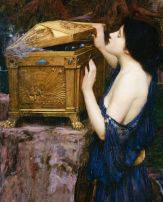
patriarchy (that’s a whole other article to explain), asserted that women needed to be restrained for the good of civilization. “Zeus eventually puts an end to the successive overthrowing of kings by conspiracies of wives and sons. Establishing a patriarchal government on Olympus. Zeus introduces moral order and culture…”[1] They believed that women were more animal-like, subject to base instincts, sexually wild and would destroy civilization if not properly controlled.[2] As my friend E.J. likes to say, “social ideal does not equal social reality,” so certainly there are plenty of examples of women in Ancient Greek society who were not at all controlled.
But the idea was there. If there is a fear that women can dismantle civilization, what role

did women play before civilization was established? As evidenced by Lilith, early civilizations like both the Ancient Greeks and the Israelites expressed concern over patriarchal order, which became synonymous with civilized order. Nomadic groups became “barbaric” and “uncivilized.” In these early groups women seemed to have had at least a place of respect, if not reverence or even dominance.
Could Lilith and Eve’s story have more to do with the fear of the ruin of civilization and a return to equality of the genders?

Many of the earliest artifacts found in and around Europe, Asia Minor and the Middle East depict an array of what is known as Venus figurines dating from this prehistoric time period.
Don’t let the name mislead you, these figurines have little to do with the Roman goddess Venus. Instead these date from prehistory, the Paleolithic to the Bronze Age, a time long before the Roman Republic. Most famous (and bearing the same misleading name) is the Venus of Willendorf. The depictions of women are carved from stone, antlers, bones or shaped from clay and fired.
So why am I talking about all this? You thought this was an article about rebellious women? Bear with me.
These figurines may represent something far bigger than the shape of a woman crafted into the perfect handheld icon. Certainly, the exaggerated focus breasts, hips and the pubic triangle, seem to indicate that these were for fertility,

but this not certain. It is important to note that these figurines are found throughout Europe – Germany, Austria, Italy, France and Russia to name a few. Further, they have strong connections to other symbols and figurines found in the early Mediterranean cultures like the Minoans of Crete and places like Çatalhöyük in Turkey. These connections and the wide-ranging areas they have been discovered may indicate something much bigger than reverence of fertility alone. They could represent a social ideal, a wide-spread reverence for womanhood—sacred

womanhood, socially equal, or even superior womanhood.None of this is definitive, but the sheer amount of Venus figurines point to something focused on women.
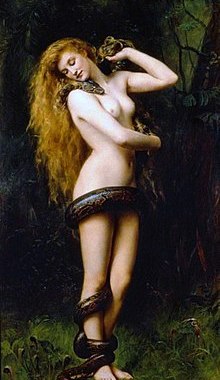
In Jewish mythology, Lilith was the first woman created by God. The earliest written form of her story appears in the early Middle Ages (between the 8th to 10th centuries), but is much older. It is no surprise however, that it was written during a time that marked significant struggles for new social orders. As Adam’s wife, Lilith refused to have sex in the missionary position saying to Adam, “We are equal to each other inasmuch as we were both created from the earth.”[3] Before you get caught up in the Kama Sutra of sexual positions, realize the story has much more to do with social dominance. Lilith didn’t just have a problem with how she and Adam engaged in sex, she had a problem with the inherent idea that she was, “fit only to be in the bottom position, while I (Adam) am to be the superior one.”[4] When Adam refused to treat her as an equal, Lilith left him with all the credit card bills and the Garden of Eden mortgage and went out to find herself in the great unknown of the world beyond.
So here we are, Lilith decided she was equal and wasn’t going to put up with Adam’s ideas of superiority. Not so demonic is that? Ok hold on to this information, you’re going to need it to put together the pieces of what the conflict was really all about.
Adam complained to God, “the woman you have given me has run away.”[5] Note the concept here that Adam has ownership over Lilith as seemed sanctioned by God. So Lilith ran away and God seemed compelled to “give” Adam another wife.
Then came Eve.
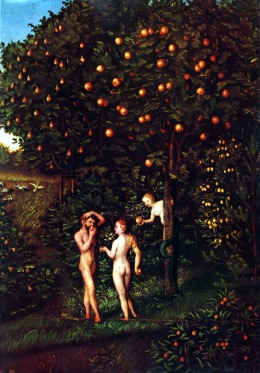
Lilith isn’t in the Bible, but Eve is and unlike Lilith, Eve is rather cooperative with Adam. She doesn’t spend much time fighting with him and seems to accept her relative lower 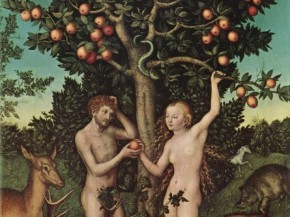 position. However, Eve is ultimately tempted and finally eats the forbidden fruit. When she does this, she was not transgressing Adam, instead she was transgressing God by accessing the Tree of Knowledge he has forbidden. God in these stories is the ultimate male power who has exerted order and established a great place to live (i.e. civilization). Eden has inadvertently rejected the social ideal of her subservience, by not only disobeying God, but also through the desire and obtainment of knowledge. Because of Eve’s disobedience (and of course Adam too) they are cast out of Eden.
Oh no! A woman has caused destruction of civilization that the Ancient Greeks feared.
The mythological Lilith became a demonic power after leaving Adam. There are many forms her legend has taken over the ages – the cause of sickness in infants, an evil spirit, a lamia, a spirit that brings death and destruction, a succubus and a hyper-sexualized temptress that brings ruin to men who can’t help but desire her. Sometimes all or some of these ideas are wrapped together. These concepts of Lilith go all the way back to Sumer, indicating that Lilith was a shared cultural idea, as the prehistoric Venus figurines were a shared cultural idea.
The metamorphosis and focus on Lilith’s refusal to adhere to the social order set out before her, indicates a strong patriarchal reaction to (at the very least) a much more egalitarian value system between genders. With the establishment of civilization and increasing successful births rates due to settled lifestyles, the importance of woman waned before the need for a definitive social order in the face of the increased population centers. With the increase of things to own and wealth to accumulate (things difficult to do in a nomadic culture), a system of inheritance rose up. No longer could possessions be passed communally since communities were much too large in this structure. Familial relations over community relations become more important for the purpose of passing on goods and property. In order to determine familial relations, a formal system of mating (marriage) had to be established as well. In a patriarchal structure this amounted to essentially ownership over their spouse(s) as well as their offspring.
So…
Lilith is what happens when a woman refuses to accept a lower position.
Eve is what happens when a woman desires knowledge.
A whole lot of blame. (Really Adam you couldn’t just be bottom sometimes?)
Ultimately, Lilith isn’t quite the demon she is made out to be. Eve isn’t quite the betrayer she is made out to be. Instead they represent some of the earliest fears of female agency.
Arguments we continue to hear today when women’s rights are discussed, argued over and… well, are also demonized.
_______________________________________________________
Endnotes
[1] Sarah B. Pomeroy, Goddesses, Whores, Wives, and Slaves. (New York: Schocken Books, 1975) 2.
[2] “But the woman took off the great lid of the jar with her hands and scattered all these and her thought caused sorrow and mischief to men.” “Pandora: Hesoid, Works and Days.” Theoi Greek Mythology, Accessed 02 June 2018. http://www.theoi.com/Heroine/Pandora.html
[3] “The Alphabet of Ben Sira: The Story of Lilith.” trans. Norman Bronznick. Jewish and Christian Literature, Accessed 02 June 2018. http://jewishchristianlit.com/Topics/Lilith/alphabet.html
[4] Ibid.
[5] Ibid.




 As a doctor treats Genevieve for a broken arm, he correctly guesses she’d been injured by a man and says, “If it had been one of your witches, now, you wouldn’t have lived out the week, and there wouldn’t be a mark to show.”
 few times have we seen a female one. We didn’t know what to expect. There was a nationwide gasp when the beautiful Theron transformed herself into the physicality of Wuornos through the help of make-up, but also through something more, a dark vulnerability.
 members, but there is no definitive evidence to prove them. She married young to Ferenc Nàdasdy. Shortly before at age thirteen, she gave birth to a child most likely fathered by a male of a lower social class, possibly even a servant. It is no surprise that the child was sent away immediately after birth. Bathory was considered a beauty in her time and following the birth of her first child, got into line with social expectations and often capitalizing on them. If anything, she seemed to become acutely aware of appearances.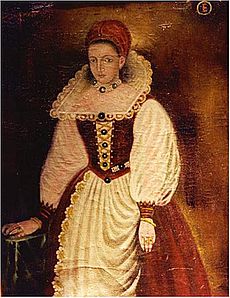





 hadow on the Crown is the first book in Patricia Bracewell’s trilogy about the real-life Emma of Normandy, who was queen of England twice over. Emma was married off to King Æthelred of England in 1002 by her brother Richard, the duke of Normandy, to form an alliance they hope will keep the Danes away from their shores. Although Æthelred’s first wife was only a consort, Richard makes Emma’s crowning a requirement of the treaty.
 bearing children confers power on women in general and on queens in particular, it’s a power that isn’t absolute. Æthelred’s first wife dies in childbirth, and Bracewell mentions that Emma’s own mother had lost three children in addition to giving birth to eight surviving ones. Emma’s rival for the king’s affections, Elgiva, knows that if Emma has a child, it will reinforce her standing as queen. When Emma becomes pregnant, Elgiva has her waiting woman slip poison into Emma’s wine to cause her to miscarry. There is no easily available source for Emma experiencing a miscarriage, so it’s safe to say this is a fictional part of historical fiction. However, the point stands. Forcing Emma to miscarry is a way for Elgiva to take Emma’s power away and to assert her own.
 he few forms of power available to them can be inspiring to read about.
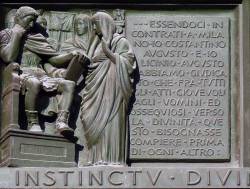 closest to the divine, being newly emerged into the mortal world, theologically asserting that infants exemplified purity. By 787, we see the establishment of the first orphanages in Christianized regions of Italy. In Milan, the Archbishop had a special revolving cradle installed so women could anonymously leave children.
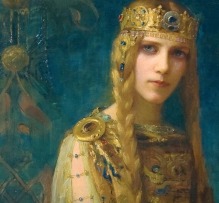 But it wasn’t just a sense of heightened morality and compassion instituted by religious conversion that created these changes. After the failings of partible inheritance, primogeniture developed, a system of inheritance that depended on first-born children of the sovereign. This system was not only in the interest of the ruling family, but to the fiefdoms of early Medieval Europe who also practiced primogeniture in their own households. In the post-Roman world, hyper-localism reigned in order to maintain pockets of stability. Broken systems of inheritance or uncertain heirs often led to fractured support of the elite classes who contributed to military power. When this happened, the already tenuous balance would shift and ultimately led to grabs for power, conflict and war. The birth of heirs, became overwhelming stressed for the preservation of social and economic order.
 her, women’s access to easy movement became limited. Power for elite women, was derived from her family, husband and particularly her position as mother of male heirs. Mothers were responsible for the basic indoctrination and instruction of their children into Christian values. Oddly enough, mothers became the backbone of the perpetuation of their own suppression, but also the elevation of children as important parts of the social order. Advanced education for boys, occurred after this period by male instructors.

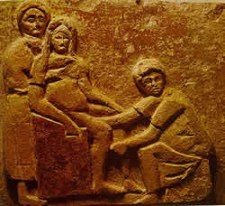

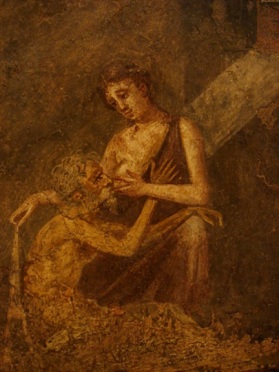
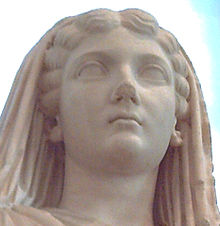
 the paterfamilias some women most likely were allowed to make that decision, or heavily influenced a decision. There were women who likely agonized over a malformed child, fought the decisions of their paterfamilias and others who were more accepting over it. The way Romans saw infants seems to indicate that they may have viewed infant exposure as equal to a late stage abortion or even an act of mercy for a sick infant or a household with financial constraints.
 Hesiod’s Theogany