
 by Serena Jayne
The rebirth of the earth during spring signals the opportunity for new beginnings. Spring is the epitome of a juice cleanse after scarfing down an entire box of Girl Scout cookies. Spring cleaning allows people to shed their hoarder habits, and finally locate their lucky socks. There’s no better time than spring to take an inventory of one’s life, and use the fresh start to focus on what truly matters.
Charles Prendergast’s painting “Untitled (Rites of Spring),” which is a part of the Art Institute of Chicago’s collection, shows a number of maidens frolicking in celebration of the season. The gold and silver leaf makes the scene sparkle and shine. Even the birds look happy. Spring is not only in the air, but in the minds and hearts of every joyful creature depicted.

The seasons progress much like the triple goddess expressed as maiden, mother, and crone. Spring is the fresh-faced maiden, unspoiled and full of opportunity. Summer becomes the mother, whose energy is shifted to her kiddies who keep her busy chasing rainbows and unicorn dreams under a sunny sky. Fall and winter symbolize the crone, who brings wisdom and sometimes icy regret, a far cry from the promise and hope of spring.
In Greek Mythology, Hades abducts a maiden named Persephone and takes her to his home in the Underworld. Her mother Demeter, the goddess of agriculture among other things, expresses her grief over the loss of her daughter by making the earth barren.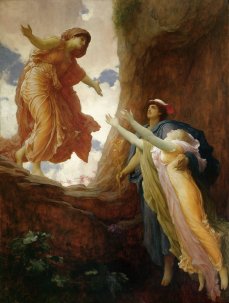 Persephone’s return from the Underworld is arranged, but because of the pomegranate seeds she’d consumed there, Hades maintains a hold on her. A kind of shared custody agreement is struck, where she splits her time between Earth and the Underworld. When mother and daughter are reunited, Demeter’s icy exterior melts bringing spring. The Earth remains fertile until Persephone’s return to the Underworld come fall.
The myth of Persephone and Demeter demonstrates a new beginning. The mother-daughter relationship is ever changed by Persephone’s abduction and her seasonal return to Earth. Demeter is forced to see her daughter, not as a child, but as a woman. Absence may make the heart grow fonder. A reunion with what was once lost brings a new appreciation and gratitude. The requirement to share her daughter with Hades makes each moment with Persephone a little more special—a little more precious. Something perhaps previously taken for granted is now cherished.
In his book, The Subtle Art of Not Giving a F*ck: A Counterintuitive Approach to Living a Good Life, Mark Manson encourages the reader to restrict her time and energy to the people and things that truly matter in life. Change generated by unsolicited self-evaluation beats regret, because as magical as spring may be, second chances aren’t a guarantee. Time trudges ever forward. If one fails to take advantage of the renewal spring offers, soon it’s time to pull out the boots, puffy coats, and snow shovels, and opportunities turn to might-have-beens.
 Use spring to jump start positive change. Decide where best to channel time and energy. Make plans with friends and family. Dust off that To-Do list. Prioritize To-Be-Read lists and bucket lists or simply decide who and what matters most, and adjust time and energy accordingly. If things don’t go as expected, don’t worry. Persephone will be back for a return engagement bringing the gift of another opportunity for a fresh start and a bright future. Plan accordingly.
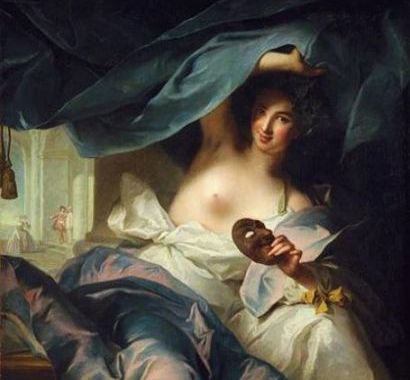

 important to the Eleusinian Mystery cult, the goddess was indeed desolate without her daughter. She was in great mourning when Hades stole away her daughter
 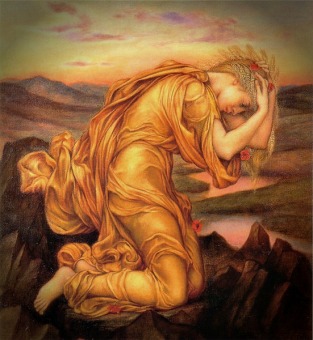 Seeing Demeter’s state, Iambê, true to her nature began to tease the mother goddess by telling jokes. Her use of humor brought a smile to Demeter, then eventually the mother goddess found herself laughing and enjoying herself. “Iambê, the one who knows what is dear and what is not, started making fun. Making many jokes, she turned the Holy Lady’s disposition in another direction, making her smile and laugh and have a merry thûmos.”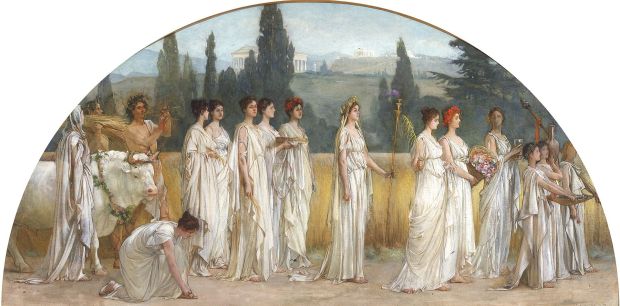

 The Sumerian Ereshkigal is one of the earliest examples of an underground death goddesses. She is featured prominently in the Descent of Inanna, as her sister who ultimately slays Inanna and hangs the body on a meat hook along the wall of the afterlife. Inanna’s journey to the underworld is a process of stripping away parts of herself, culminating eventually in the stripping of her very life. Ereshkigal slays her sister because all those who enter the underworld must experience death. “She who receive the me of the underworld does not return. She who goes to the Dark City stays there.”
 specifically linked to death, her nature is ultimately both primordial and dualistic. She existed before the world was created. Her identity is both the absence of light as well as the absence of order and one can further compare a symbolic connection to life and death cycles. Interestingly enough, Nyx is believed to have been the mother of the incarnations of light and day. Again, the dualistic existence is prominent. Cycles are of utmost importance as one exists alongside the other.
 Unbound