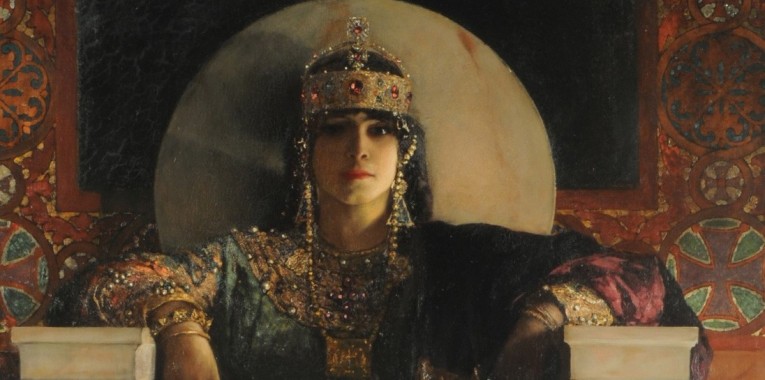
by K.P. Kulski
In the 6th century, known for her sharp intelligence and political acumen, the Byzantine Empress Theodora was a force to be reckoned with.
Even today, there is something about Theodora that continues to draw attention. She was a unique figure in the Byzantine world. A woman who not only occupied a high position within the Empire, but appeared to have ruled just as much as her husband, the Emperor Justinian. In some sources it is suggested that she may have been a co-regent. The pair was the quintessential “power couple,” and their match appears to have been one created around love as well as reliance and respect of each other’s capabilities.

While all of this is exceptional, more surprising is that Theodora did not come from a prestigious or politically powerful family. Instead she came from quite a low position within Byzantine society. The great Theodora, long before she took the throne was an actress. While our modern world tends to exalt actresses who rise to high levels of fame, actresses of the Byzantine world did not inhabit a position of respect or particular adulation. If anything, since actresses were often also sex workers in the Empire, the profession was considered despicable one.
Despite this, Theodora used her experience on stage to emphasize imperial ritual, recognizing that acting and all the props that came with it could be a form of social signaling. This was especially useful when it came to her and her husband’s interactions with the aristocracy, effectively creating a visible divide and reaffirming of their authority over members of the elite.
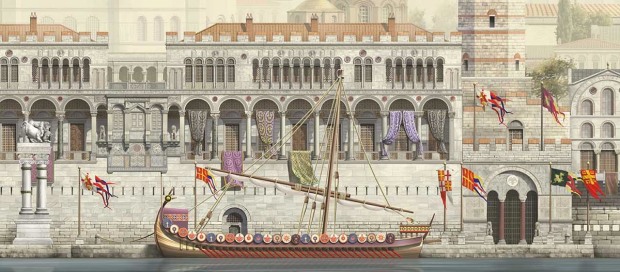
She intrinsically understood the political danger of unchecked power among the elite classes. She was able to manage these groups through interactions that stressed their lower status in relation to her and Justinian. Theodora did not always use her authority to support her husband. In religious matters there were times that she worked directly against him in order to achieve power and influence for the monophysite faction of the early Christian Church. Further, Theodora was responsible for laws that protected lower class women from sexual exploitation in the Empire, all the while fiercely maintaining her own power and influence.
 She is most famously known for her intercession during the Nika Riots, from which her husband Justinian had planned to flee Byzantium at risk of his position on the throne. It was Theodora who stopped him and wisely mentioned that those who had been in the position of power rarely survived if they were ousted. It is also recorded that she proclaimed purple (the color of royalty) was a good color to be buried in… essentially saying if she was going to die, she would die as an Empress. That was enough to dissuade Justinian and they were able to successfully regain control of the city from the rioters.
It is clear Theodora’s time as a performer gave her a unique understanding of her position as Empress and despite her lowborn social class, she carved out her own power and influence. It seems that she knowing brought the shine of “showbiz” with her as she entered into life as an imperial ruler and religious leader.


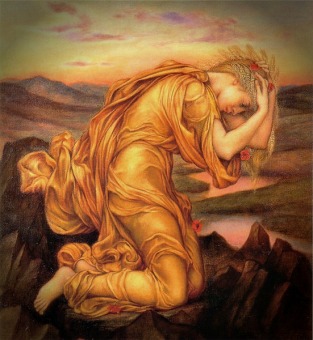
 important to the Eleusinian Mystery cult, the goddess was indeed desolate without her daughter. She was in great mourning when Hades stole away her daughter
  Seeing Demeter’s state, Iambê, true to her nature began to tease the mother goddess by telling jokes. Her use of humor brought a smile to Demeter, then eventually the mother goddess found herself laughing and enjoying herself. “Iambê, the one who knows what is dear and what is not, started making fun. Making many jokes, she turned the Holy Lady’s disposition in another direction, making her smile and laugh and have a merry thûmos.”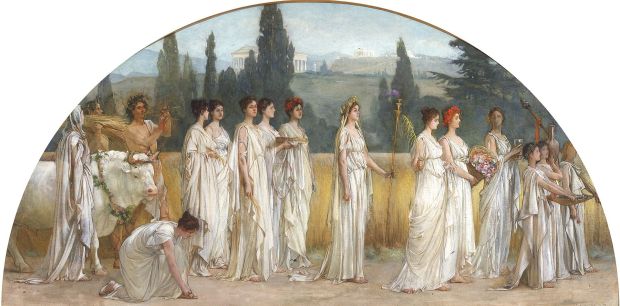
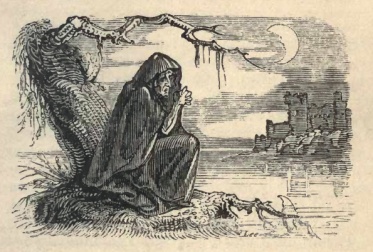 ailing family member. Through the window comes the sound of a woman in the grips of deepest grief. She is unrestrained in her keening, raw with sorrow. It is not merely the mysterious sounds that fill you with fear, but also the knowledge that in the day that follows, a member of your household will pass from the world. The source of this wailing is a banshee. She is a fairy, though she is far from what a modern American imagination might summon up at the word: this is no mischievous winged sprite, but rather an omen given a woman’s form.
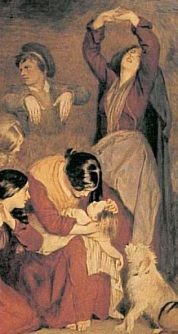 Like the ancient Celtic wife, the banshee too is a liminal being. Banshees usually appear at midnight, the liminal moment between two days, and represent a person’s passage into a sort of pre-death space in which they continue to live but are known to be near death. They also were heard from outside of homes, but never seem to enter them—the inverse of an ordinary woman, who would be strongly associated with hearth and home. Also like the ancient Celtic wife, the banshee has strained but important ties to the line of kinship: certain families were believed to be “followed” by a banshee. To be from a family followed by a banshee may have been a symbol of a certain rank and a point of pride.
 The Sumerian Ereshkigal is one of the earliest examples of an underground death goddesses. She is featured prominently in the Descent of Inanna, as her sister who ultimately slays Inanna and hangs the body on a meat hook along the wall of the afterlife. Inanna’s journey to the underworld is a process of stripping away parts of herself, culminating eventually in the stripping of her very life. Ereshkigal slays her sister because all those who enter the underworld must experience death. “She who receive the me of the underworld does not return. She who goes to the Dark City stays there.”
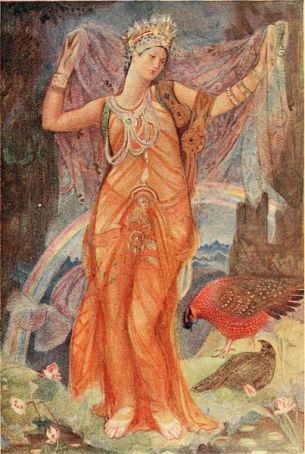 specifically linked to death, her nature is ultimately both primordial and dualistic. She existed before the world was created. Her identity is both the absence of light as well as the absence of order and one can further compare a symbolic connection to life and death cycles. Interestingly enough, Nyx is believed to have been the mother of the incarnations of light and day. Again, the dualistic existence is prominent. Cycles are of utmost importance as one exists alongside the other.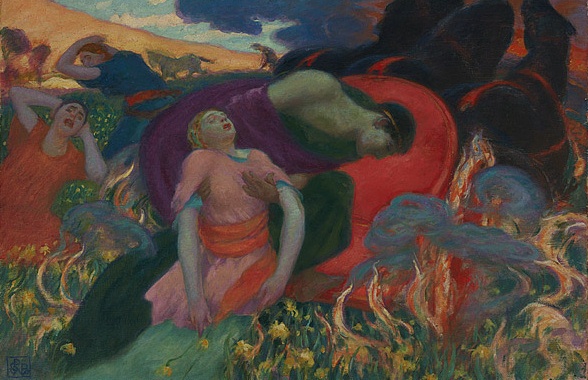

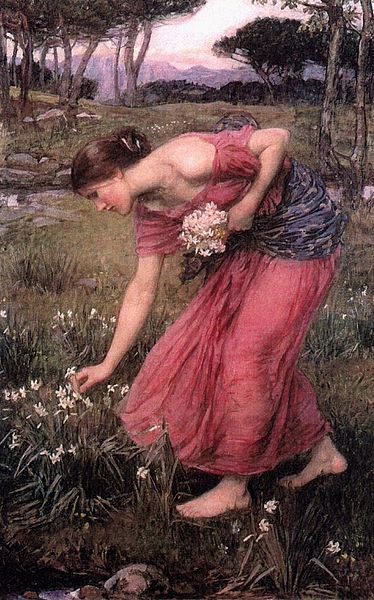
 I think that’s one of the questions more modern fiction, in the form of retellings and adaptations of Persephone’s tale, likes to explore. Roshani Chokshi’s The Star-Touched Queen is a fantasy novel that’s inspired by India and Indian mythology



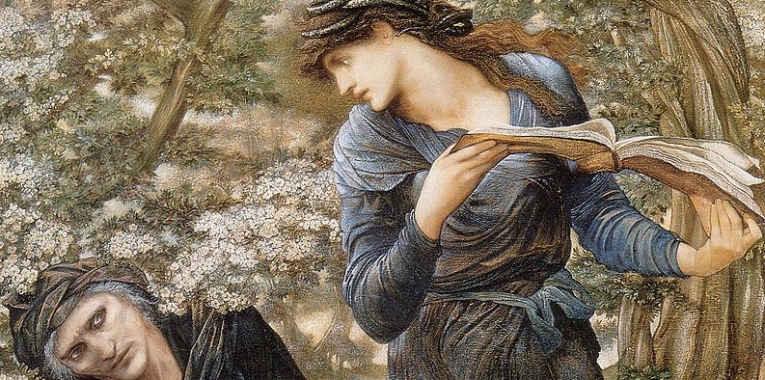




 Unbound